
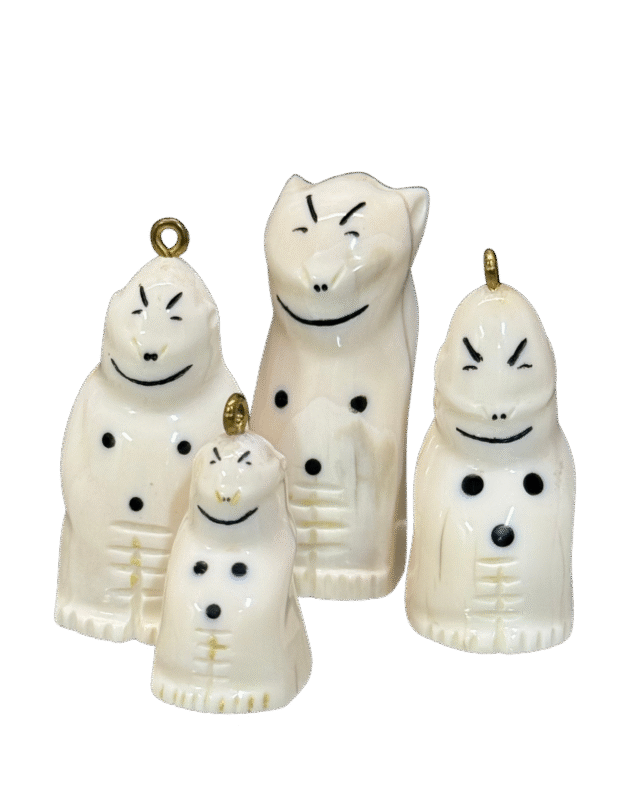
For generations, artists from the Bering Strait region have been recognized for their skill in carving ivory, bone, antler, and other natural materials. Among the many forms associated with Alaska Native carving traditions, the ivory Billiken—a small figure believed to bring good luck—holds a unique place as both a collectible charm and a familiar example of artwork created for trade and sale.
Around 1910, Inupiaq master carver “Happy Jack” Angokwazhuk is often connected to the early adaptation of the Billiken into ivory, possibly after seeing one at the 1909 Alaska-Yukon-Pacific Exposition in Seattle. By the 1940s, many Alaska Native carvers were creating Billikens from ivory, stone, and sperm whale tooth, selling them to soldiers, tourists, and other visitors as good luck charms. These carvings were often accompanied by cards that read, “Rub his tummy or tickle his toes, you’ll have good luck so the story goes.”
Although the Billiken did not originate in Alaska, Bering Strait artists transformed it through local materials, craftsmanship, and style. Each carving reflects the artist’s hand, with details such as facial expression, shape, polish, and engraving giving every piece its own character. Today, ivory Billikens remain collectible pieces and reminders of the creativity, resourcefulness, and adaptability of Bering Strait carvers.
Do you have a Billiken? Send a photo to
photos@beringstraits.com
This article draws on the research of anthropologist Dorothy Jean Ray, particularly “The Billiken” (Alaska Journal, Winter 1974), and incorporates additional historical context from David Reamer’s 2025 Anchorage Daily News article, “Billikens: The Grinning, Pot-Bellied Good Luck Charm That Dominated Midcentury Alaska.”